 Nishiki market was the first shotengai I entered in Japan, shotengai is an arcade or roofed street, long and full of shops and restaurants. It was a friend from Kioto who brought me there. Thousand of colours and flavors exploded in my head, dry fish from all kind of shapes and many tiny shops and shopkeepers screaming Irashaiii!!!, Irashaii!!! the japanese word for welcome!, welcome!, as an european my brain became a bit frozen, because our mind in the old continent are not designs to think many things at the same time, we go to the market, or we go to the restaurant, but in Japan everything is mixed up, in the shotengais, restaurants, markets, fisheries, fruits shops and also pharmacies and supermarkets, everything is together, and that It's why enter in a Shotengai is fun, because you never know where you are going to end up.
Irasahiii!, from that day I never forgot this magic word that tells you that you are in Japan, irasahaii!.
For people who visit Kioto you cannot miss the amazing Nishiki Market, located on a road one block parallel to Shijo street and west to Teramachi street.
Irashaiii!!
Mostrando entradas con la etiqueta urbansketches. Mostrar todas las entradas
Mostrando entradas con la etiqueta urbansketches. Mostrar todas las entradas
lunes, 31 de diciembre de 2012
Nishiki Market (Kioto) Irashaaiiiii!!
Nishiki market was the first shotengai I entered in Japan, shotengai is an arcade or roofed street, long and full of shops and restaurants. It was a friend from Kioto who brought me there. Thousand of colours and flavors exploded in my head, dry fish from all kind of shapes and many tiny shops and shopkeepers screaming Irashaiii!!!, Irashaii!!! the japanese word for welcome!, welcome!, as an european my brain became a bit frozen, because our mind in the old continent are not designs to think many things at the same time, we go to the market, or we go to the restaurant, but in Japan everything is mixed up, in the shotengais, restaurants, markets, fisheries, fruits shops and also pharmacies and supermarkets, everything is together, and that It's why enter in a Shotengai is fun, because you never know where you are going to end up.
Irasahiii!, from that day I never forgot this magic word that tells you that you are in Japan, irasahaii!.
For people who visit Kioto you cannot miss the amazing Nishiki Market, located on a road one block parallel to Shijo street and west to Teramachi street.
Irashaiii!!

jueves, 20 de diciembre de 2012

miércoles, 12 de diciembre de 2012
Poza del gobion
 En el principio el mar lo abarcaba todo, poco a poco las aguas cedieron al poder de la tierra y fue entonces cuando aquel enorme pegnasco surgio de las profundidades, los pueblos de aquel lugar fundaron un pequeno poblado, erigiendose sobre otras gentes hispanas, entonces llegaron los fenicios y con ellos el almendro, comerciaron con los locales, instaurando minas de sal, mas tarde los arabes desembarcaron desde las tierras del otro lado del mar, tallando aquel castillo desde la misma piedra, trajeron la cagna, el tomate y la canela, ochocientos anos estuvieron senor mio, ochocientos anos de moreria. Los cristianos regresaron asediando el castillo, encerrando al rey moro en las entranas de la roca. Luego las guerras y los lustros se sucedieron, quinientos anos en los que el azucar de cana se cultivo, mozarabes, judios y ricos comerciantes con ella comerciaron, finalmente la fabrica se erigio, familias adineradas de Granada la manufacturaron, finalmente aciagos politicos y nefastos gestores esquilmaron tan dulce cultivo, quedando solo la fabrica, descuidada, oxidado testigo de tiempos mejores,ay madre como me acuerdo de aquellos gobiones en la poza, tan gordos como anguilas, donde estan madre? acaso se los trago el mar??, no, fue el hierro y la espada...al frente el castillo y el mar, el mar que lo abarcaba todo y que ahora cede ante el poder de la espada.
sábado, 1 de diciembre de 2012

domingo, 25 de noviembre de 2012
sábado, 24 de noviembre de 2012
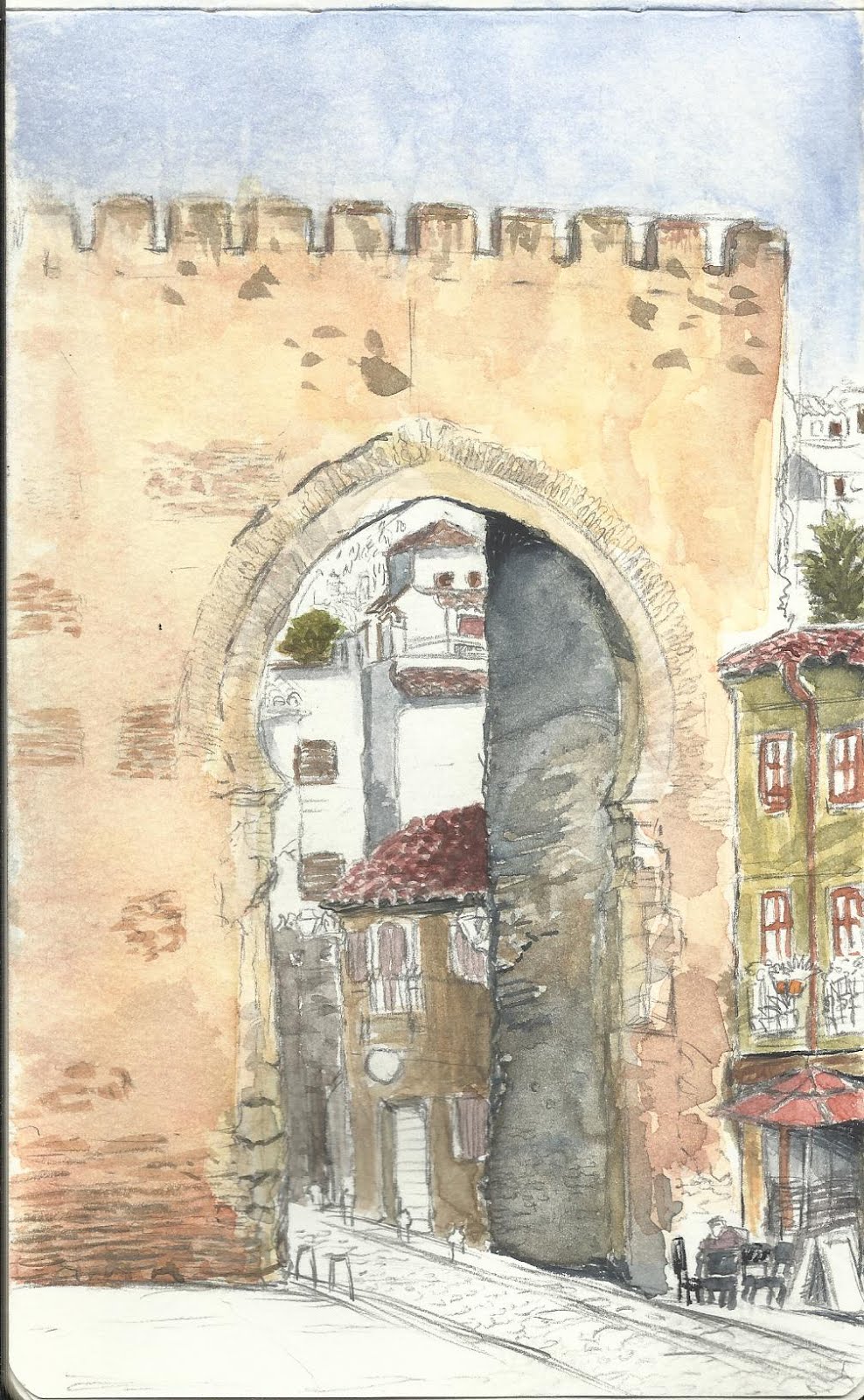
Iglesia de Santa Ana
 Esta iglesia forma parte del conjunto de iglesias mudéjares de la ciudad de Granada. Por si alguien desconoce el arte mudéjar, se trata de un estilo artístico que se desarrolla en
Los reinos cristianos de la Península ibérica, pero que incorpora influencias, elementos o materiales de estilo hispano-musulmán. Se trata de un estilo exclusivamente hispánico, que tiene lugar entre los s.XII y XVI, como mezcla de las corrientes artísticas cristianas y musulmanas de la época y que sirven de eslabón entre las culturas cristianas y el Islam.
Santa Ana fue construida en el ano 1537 según proyecto de Diego de Siloé, el artista de más renombre de la época en su zona. La iglesia se erige en el solar donde anteriormente se encontraba un oratorio islámico, la mezquita de Aljama Almanzora. De aquella anterior mezquita se conserva hoy su alminar, una bella torre de ladrillo de gran esbeltez, donde se superponen hasta cuatro tramos de menor a mayor en su orden de altura, todos con sutiles elementos decorativos a modo de alfil que los enmarcan superiormente.
Como datos anecdóticos dentro de la historia de esta iglesia cabe decir que en ella contrajo matrimonio Mariana de Pineda, la popular heroína ejecutada bajo el reinado de Fernando VII, conservando además los restos del escultor y pintor local José Risueño, sucesor de la línea artística de Alonso Cano.
domingo, 18 de noviembre de 2012
Japanese Macudonarudo
 Spain is probably one of the few countries on the planet where Macdonalds didn't put their greedy tentacles, they tried several times to spread their fast and addictive food, but they always fail. In a country with a strong bar culture and where everybody eats bocadillos (Spanish word for sandwiches, this american franchise didn't have any future. On the opposite, Japan and specially Tokyo area, with a huge influence of American culture, was the perfect nest to place macdonalds shops everywhere.
I have to say that It was when I came to Japan when I became addicted to this shitty, plastic food, In Kanto area Its difficult to avoid this kind of places, they are in everywhere, and some of the locations are on the best parts of Tokyo, where you can have a synthetic meal for a small amount of money. Ok, Ok, I know, I know, the location doesnt justified the fact that you are eating shit. I don't know, maybe was a combination of loneliness, huge publicity, and stupidity the reason I started to go there once week, or maybe because is crap, but taste delicious, bastards!!.
One day, I was there eating my chicken burguer menu, when I look around I saw a lot of young guys, maybe around 22 or 27, with japanese you never guess, probably young salarymen, I realized that absolutely nobody was communicating to each other, but all of them where playing games or using the movil, absolutely nobody spoke, their smiles came from the latest game or just the new tool in the mobil phone, the worst thing was that in the middle of the scene, was a Spanish guy in almost in the middle of his thirties, in the middle of Tokyo, sketching this weird scene, somehow I had the feeling that I was watching the future of other places, where people communicate every year less, and loneliness start to became a relevant issue.
I have to say that Japanese Macdonalds have some positive aspects, on the contrary that here in Europe, some of them, specially in the big cities they are opened 24 hours, and the coffee that doesn't taste good, is hot and cheap, just 100 yen, less than a euro. Japanese winter is really harsh, and those Macdonalds are warmed places for beggars where they can stay the whole night and drink hot coffee for a cheap prize, otherwise they would be freezing in the streets. The staff there, mostly young japanese students working part-time, they leave alone the costumers, no matter if they dress armani or wear just rags. I remember a couple of times, one in London and another in Belgium where I had to leave my acommodation very early in the night to take a plane that took off several hours later and I had to wait in the streets because there werent any place open, at those moments It would have been nice to have one of those warmed macdonalds that abound in Tokyo.
sábado, 17 de noviembre de 2012

jueves, 15 de noviembre de 2012
Homeless
 I have heard many stories about Japanese homeless, there is an urban legend that says that not very long time ago, Japan was a prospered nation where everybody belonged to a wealthy middle class. During the eighties, It was common to throw washing machines, computers, televisions and other brand new things, because japanese always wanted to have the newest model of every electronic devise. Apparently the nineties came and Japan suffered a big economical crisis, at that time, many wealthy employees,like bank officers or salarymen lost their jobs, and in a country like Japan, highly capitalist, and with little social protection, many of those people became homeless, some of those people still living in the street without a roof, making their homes using sheets of blue plastic and other materials found in the streets.
legends apart, homeless here, are totally different from others that I have seen in other zones of the planet, probably because they belong to an unique economic and social reality which is Japan, they share common models of conducts, they never beg for example, and they are very tidy, neat and clean, trying to keep their staff organized and occupying the minimum space. I draw those two men in the middle of Tokyo, very near Shibuya station, they were sitting down on the entrance of a metro station, in front of them was a huge crowd of japanese people walking in lines like ants in both directions to take the subways or to go to the citycenter, It was december, and It was really cold at that time, I did the sketch in five minutes and I wanted to invite them for a warm can coffee, but they were kind of sleeping and never look at me, protecting from the coldness.
Japan, Shibuya 15th of December, 2010
viernes, 9 de noviembre de 2012
Sierra Lújar
 Pasé mi infancia y adolescencia rodeado de libros, lecturas de antaño que hoy día quedaron relegadas por capas de polvo en mis estanterías. Estas incipientes lecturas actuaron como pasadizos de papel que me llevaron a otras lecturas y a otros mundos literarios, que irían marcando mi vida, mis viajes, quedando vida y ficción entrelazadas para siempre, gestando al idealista radical que soy hoy en dia.
Entre aquellos primigenios mejunjes de realidad y ficción literaria, recuerdo aquellas peladas montañas que se avistaban desde la ventana de mi casa, por esos tiempos devoraba yo la trilogía del Señor de los anillos, y no importaba cuantas sensatas gentes me dijeron que lo que lo que yo llamaba Las montanas negras de Sauron era sencillamente Sierra Lújar, aquel domingo contaba yo trece años, agarré un par de galletas maría que yo llamaba “lembas”, y eché andar por los campos hacia aquellas siniestras lomas, mientras andaba fantaseaba con ver algún orco o pequeño trasgo, después de cinco horas caminando y temiendo ser engullido por la noche, decidí regresar a casa con los pies doloridos, jamás llegué a alcanzar aquellas montañas negras, pero en aquel viaje ví campos y bosquecillos de gran belleza, olí la tierra húmeda, como solo aquí huele, y descubrí otros pequeños pueblos tan parecidos pero tan distintos al mío, esta fue una de las primeras aventuras en solitario que ya de adulto haría por tierras mucho más lejanas y exóticas.
La mañana que hice el boceto, el día se hizo gris y aparecieron estas nubes preñadas de agua. ese mismo día los truenos iniciaron un aguacero que duró siete dias.
lunes, 22 de octubre de 2012
Gambullón
 Hace tiempo, leí en un viejo libro, que en época árabe la roca donde se erige el pintoresco pueblo de Salobreña estaba rodeada por el mar. Había un famoso embarcadero llamado Gambullón, en donde los árabes atracaban sus navíos procedentes del mar. Hoy en día Salobreña esta rodeada de tierra, y el mar ha retrocedido alrededor un kilómetro desde la roca. El Gambullón, que antiguamente era un famoso embarcadero, actualmente es un pequeño nacimiento de agua, al que los salobreñeros acuden a llenar cántaros y botellas con el sabroso líquido.
lunes, 8 de octubre de 2012
Kiyomizu-dera
 Kioto es la ciudad de los templos, después de visitarla entenderemos por qué se la conoce como la ciudad santa, de todos sus monumentales santuarios el que más me impresionó fue Kiyomizudera, a diferencia de otros templos en los que para entrar deberemos soltar a buda un económico donativo, Kiomizudera, libre de sectas y clanes devotos, es el templo de todo el mundo. El único requisito para ver esta ancestral maravilla zen, será subir la empinada loma a través de Kiomizu-michi, durante mil años los peregrinos han hecho este camino para rezarle a la imagen de kanon de 11 cabezas que se encuentra en el interior. Allí podremos beber el agua pura de Ryu, el dios dragón, Kiomizu significa agua pura..
Una vez dejado atrás el lugar, y observándolo desde la loma opuesta, me impresionaron aquellos enormes cedros y pinos, que apiñados en gigantesca masa arbórea, parecían los mudos guardianes de aquel lugar, en contraste, los japoneses aparecían empequeñecidos por la distancia. El pueblo profano nipón, al que si el ingenuo extranjero le preguntara por su religión, le respondería sin pestañear que es sintoísta, budista, cristiano, de todas ellas a la vez o simplemente ateo, el mismo pueblo que, sin embargo, cada semana acudirá religiosamente al templo a rezar y a pedir ofrendas.
martes, 17 de julio de 2012
Algo más que un disfraz
 Una de las numerosas particularidades de la sociedad japonesa es su afición por los uniformes, usados por diferentes razones, entre ellas la de sentirse parte de un todo, en una sociedad hiperorganizada y en donde los instintos del individuo se supeditan al trabajo en equipo, los uniformes son una manera expresar la inscripción del individuo a un colectivo diferenciándose de otros grupos humanos, desde los famosos uniformes escolares, pasando por los de los taxistas, gorro azul y sus característicos guantes blancos, que jamás supe para que usan, toque de elegancia o para no ensuciar el volante?. En los gigantescos centros Takashimaya esta pasión japonesa por usar el atuendo para sentirse parte de un equipo se hace más evidente, los Takashimaya son centros comerciales situados en los centros urbanos nipones, enormes moles de hormigón de nueve plantas, cada una de ellas destinada a diferentes gamas de productos,desde ropa, comida, materiales para la casa, muebles, materiales de papelería etc. Cuando entré en la sección de comida, situada en el subsuelo, aparte de la inabarcable cantidad de tiendas y comida, lo que más me sorprendió fue los uniformes de los vendedores, lejos de ser monótonos, los empleados de cada tienda usaban uno distintivo, que variaba en colorido y diseño de la siguiente, uniformes que en ocasiones estaban en sintonía con el producto que se vendía. Todo esto me recordó a la peli de Porco Rosso, que ví hace décadas ya en mi video casero, aquella escena en la que los piratas del aire se unían para atacar un barco, los pilotos de cada hidroavión, se distinguían por tener las mismas pintas, incluso físicamente y usar las mismas ropas, a eso me recordaban esos pequeños puestecillos, a los personajes de los hidroaviones, que también y por alguna extraña razón se componían de tres miembros, sin saberlo, en aquella época ya Miyazaki me estaba profetizando la obsesiva afición de los japoneses por el uniforme para expresar su adhesión a un grupo.

lunes, 16 de abril de 2012

lunes, 12 de septiembre de 2011

martes, 30 de agosto de 2011
lunes, 1 de agosto de 2011
Thank you Beckers!!
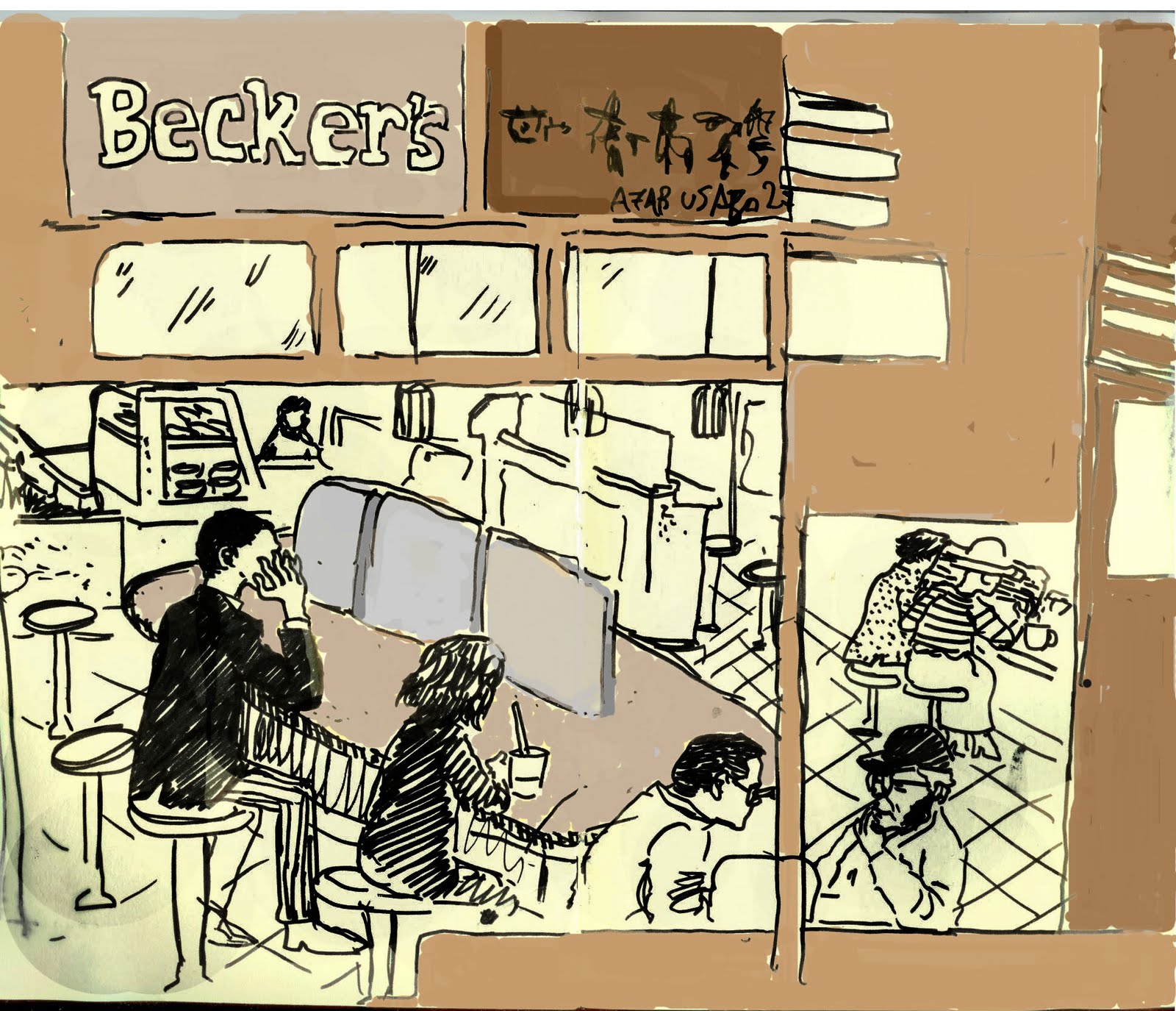
My working years in Osaka were finished, and with them my wildest time in Japan, the running ups and downs in the arched streets of Osaka, my bicycle, my comrades, the charmy familiar restaurants, the Kansai people, everything was left one rainy night when I had to go to Tokyo for my new and better paid job.
Just in one day, my style of life changed dramatically, even If I was in the same country, soon I realized that Tokyo and Osaka were two different universes, Osaka was a concentrated space that was designed for bicycles, everybody rode them, and Tokyo a huge area, surrounded by dormitory towns, where life was unthinkable without the local trains and metros, Osaka was the chaos, with its crazy arcades, and chanels, people there lived freely in the messy streets and socialize in the pubs, restaurants, Isakayas and terraces, but Tokyo, was the order a busier metropoli, where people didnt speak too much to each others wore suits, and went to cafeterias,chain food shops, mostly alone, for studying, reading or playing games.
Soon I realized that in a highly populated and stressfull city like Tokyo It was Important to find a private public space, an own area to sit down after the job and rest from the commuting trains, the crowd and the asfalt, thats how I discovered Beckers, a wooden cafeteria located underneath's Fujisawa Station.
During two years, Beckers was my bubble, my oxigen tank, my bunker, my reading place my short scape from the multitudinous solitude of Tokio, every morning I get off the first train (I had to take three to get to my job!), and I fought against the crowd to reach Becker's door, once I entered in the place I was saved, the best English breakfast was waiting for me, a crunchy well made toast, fried bacon from the finest quality, scramble egg with some ketchup, and a tasted hot coffee in winter or a huge refreshing ice coffee in Summer, on Sundays I went there to read my favorite newspaper "The Japan Times" and to eat the burguer menus, with chilli sauce, fried potatoes and ice cola.
But the best thing about Becker's was its location, just underneath of the train station, in front of the sotetsu line, in the middle of the busy crowd but protected from the crowd, inside the cafeteria everybody was relax, listening the classical music, but through the windows you could see the twisted faces running to catch the trains, trying to be in time for their jobs, jumping through the upstairs to reach the station, aahhhh at that time how good was to be inside Becker's.
Thanks Becker's for those tasted delicacies, specially the breakfast, the big ice coffees and overall for have given me a good break-time space during my time in Tokyo's jungle.
domingo, 24 de julio de 2011
Working at Kinokuniya bookstore

I made this sketch one year ago, I was in Yokohama's Kinokuniya bookstore when I realized how organized were the shopkeepers, same cool costumes, always willing to help, and always ready behind the counter, prepared for charging the costumers and dont make them waiting too much in the queue, they were like warriors waiting for a consumer army including myself.
miércoles, 20 de julio de 2011
Sketching japanese Part 2

More people sketchings, on the left page trying to study some old people figure. On the right couple and families. Some of them taken in situ in Yokohama, but some made after at home from the pictures I took with my camera.
domingo, 17 de julio de 2011
Sketching japanese Part 1

Lately I have been coloring my old people sketches in Japan. In the last few months I have been starting to use watercolours with my ink sketches, so I thought It was a good practice.
The page on the left are people drawn in Yokohama, the first one a young mother with her baby, second is a young salaryman and the third one is an old man reading the paper.
The second page, this one was inside of a small mcdonald in Tokyo at 2:00 o'clock, my friend Chris and me after drinking we went there to eat something, he entered at the same time of us, and after he finished his burguer, we suddenly realize that he felt sleep in that strange position, he should be really tired, I took a picture and I drew him because the position seemed physically impossible.
The next one is a young woman reading a book at Kinokuniya bookstore, the next is a woman taking a walk with her mini-dog, and the last one is a salaryman sleeping in the train.

Suscribirse a:
Entradas (Atom)